Cold Outreach Strategies
Nov 16, 2025
The Future of B2B Email: Surviving the AI Arms Race
AI writes the email, AI filters it, AI replies. As the system becomes machines talking to machines, decision-makers are getting better at spotting it.
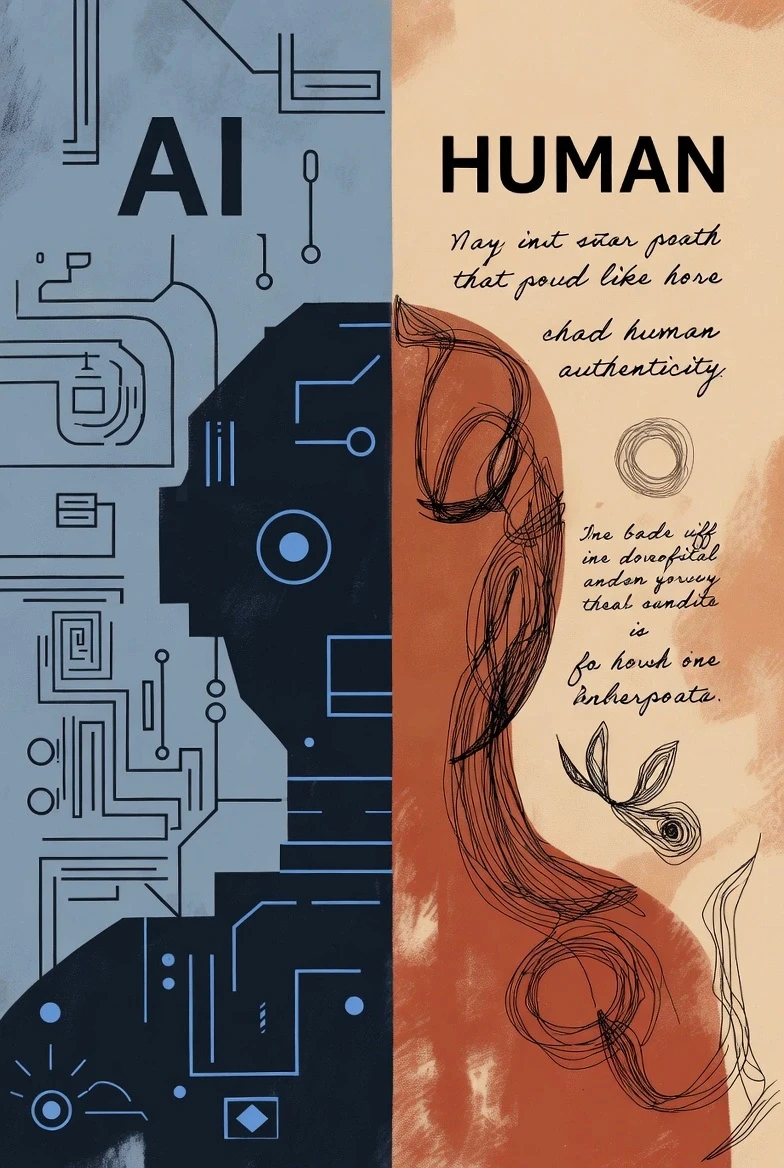
The AI Detection Problem
Prospects can smell AI-written emails now.
🎓 Generic enthusiasm that sounds upbeat but hollow
🎓 Perfect grammar with zero personality quirks
🎓 Formulaic structure that follows templates too precisely
🎓 Safe language that never takes a real stance
🎓 Buzzword density that hits every corporate cliché
One VP told us: "I can spot AI emails in three seconds. They all sound like they're trying really hard to sound casual."
When prospects assume AI wrote your message, they assume you don't actually care. They're probably right.
The AI Filter Reality
It's not just about detection. Prospects are deploying AI to filter you out:
AI assistants now screen emails before humans see them. They categorize, prioritize, and auto-reject based on patterns.
These systems look for:
Mass outreach indicators
Generic value propositions
Template-based structures
Lack of specific business context
Your AI-written email is being filtered by their AI inbox manager. Neither human ever sees it.
The irony? We automated ourselves out of the conversation.
What Still Gets Through
Despite the AI arms race, certain emails consistently reach and engage decision-makers:
Specific business insights they can't ignore Not industry trends everyone knows. Specific observations about their company.
Genuine imperfection Slight typos, conversational fragments, personality quirks that prove human authorship.
Evidence of real research Details only a human would notice or care to mention.
Unconventional formats Breaking expected patterns signals human thinking.
The Human Signal Strategy
The future belongs to emails that are provably human:
Include micro-signals of humanity:
Reference something too specific for AI to fabricate
Use unconventional sentence structures
Show genuine personality, even if imperfect
Take actual stances instead of safe corporate speak
Demonstrate impossible-to-automate research:
Connect dots between disparate information sources
Show understanding of implications, not just facts
Reference subtle context clues from multiple places
One client started including hand-drawn diagrams in their outreach. Low-tech, impossible to scale with AI, undeniably human. Their response rates tripled.
The Efficiency Paradox
Here's the tension: AI enables scale, but scale signals automation.
Send 1,000 identical emails and prospects know it's automated. Send 1,000 genuinely different emails and you can't scale.
The solution isn't choosing between scale and humanity. It's strategic allocation:
Use AI for:
Research and information gathering
Initial target identification
Data processing and analysis
Administrative follow-up tasks
Reserve human effort for:
High-value prospect outreach
Complex personalization decisions
Relationship-critical communications
Strategic messaging choices
The Anti-AI Positioning
Some companies are going full counter-trend:
"Every email you receive from us is written by an actual human who researched your company."
This positioning works because it's rare. As AI email becomes ubiquitous, human-written outreach becomes a competitive advantage.
It's slower. It's more expensive. It converts dramatically better.
Email Authentication Will Evolve
We'll likely see new verification systems emerge:
Proof-of-human protocols for important emails
Reputation systems for genuine human outreach
Penalty systems for obvious AI mass outreach
Premium inbox placement for verified human messages
The technical infrastructure will adapt to the AI reality.
The Content Evolution
B2B email content is already shifting:
Dying approaches:
Generic value propositions
Industry statistics everyone knows
Template-based sequences
Perfectly polished corporate speak
Rising approaches:
Hyper-specific business observations
Contrarian perspectives with real stakes
Conversational, imperfect human voice
Evidence of genuine one-to-one research
Practical Strategy for 2025 and Beyond
Here's how to adapt now:
Audit for AI tells Run your current emails through AI detectors. If they score high, rewrite with more humanity.
Implement human verification signals Include elements that prove human authorship and research.
Reduce volume, increase quality Better to send 50 genuinely human emails than 500 AI-generated ones.
Test anti-AI positioning Explicitly mention human research and writing in select campaigns.
Build systems that scale humanity Create frameworks that enable personalization without full automation.
The Relationship Reality
Email was always supposed to start relationships, not replace them.
AI can't build relationships. It can facilitate them, but it can't replace the human connection that drives complex B2B sales.
The companies that win the next decade will use AI to enable human connection, not eliminate it.
What This Means for You
If you're relying on AI to write all your outreach, you're already behind.
If you're using AI to enhance genuinely human outreach, you're positioned well.
The future isn't human versus AI. It's humans using AI intelligently versus humans being replaced by it.
Choose your side carefully.
What Stays Constant While the Tools Change
Every few months the conversation about email shifts to a new tool, a new filter, or a new automation trick. Underneath that churn, the fundamentals that decide whether a message succeeds have barely moved. The recipient must be a plausible buyer. The message must be relevant to them and clear about why you are writing. The sender must have a reputation that lets the message arrive. None of these is made obsolete by better technology on either side.
That is a useful anchor when predictions get dramatic. Filters will improve at spotting low-effort, high-volume mail, and generation tools will improve at producing text that looks personal. The gap between the two will keep narrowing in ways that are hard to forecast. What does not depend on the forecast is the value of sending fewer, better-targeted messages from a reputation you have protected.
Why Restraint Becomes a Competitive Advantage
As more companies use automation to send at scale, the average inbox gets noisier, and recipients grow more skeptical of anything that reads as generated. In that environment the unusual move is restraint: a smaller list, a message that clearly required thought, and a clear reason for reaching out now. The effort is visible, and visible effort is increasingly a signal in its own right.
This does not mean avoiding automation. It means using it where it saves time without lowering the quality of what reaches a person, and keeping a human check where quality matters most. Teams that do this tend to keep their reply rates steadier as the environment changes, because their results rest on relevance rather than on a loophole that will eventually close.
How to Prepare Your Outbound for What Comes Next
A few habits make an outbound program resilient to whatever the next change turns out to be. Keep your sending infrastructure separate from your main domain, so a problem never touches the company's primary email. Maintain list quality as an ongoing discipline instead of a one-time project. Review a sample of your own messages regularly with the eyes of a skeptical recipient. And keep records of what you change and what happens, so you can tell the difference between a shift in the environment and a problem of your own making.
None of this is glamorous, and none of it depends on predicting which technology wins. It is simply the work that keeps an outbound motion healthy under almost any scenario, which is the best form of preparation available when the future is genuinely uncertain.
Questions to Ask Before Adopting Any New Email Tactic
New tactics arrive constantly, usually with confident claims attached. A short set of questions helps separate useful ideas from fashionable ones. Does this improve the recipient's experience, or only the sender's volume? Would I be comfortable if the recipient could see exactly how this message was produced and targeted? What happens to my sending reputation if this goes wrong at scale? And can I test it on a small sample before committing to it?
Tactics that survive these questions tend to be the ones that age well, because they work with how providers and recipients behave rather than against it. Tactics that fail them often deliver a short burst of results followed by a quiet decline as filters and expectations catch up. Taking a few minutes to ask the questions up front is far cheaper than discovering the answer through a damaged domain or a list of irritated contacts.
The Bottom Line
Email isn't dying. Lazy, automated, AI-generated email is dying.
Decision-makers will always read messages that show genuine understanding of their business. They'll always ignore messages that feel mass-produced.
The tools change. The psychology doesn't.
Need help navigating the AI shift in B2B outreach while maintaining genuine human connection? Our team combines technology and human expertise to create campaigns that get through.
Book a demo today and discover how to win the AI arms race by being strategically human.