Cold Outreach Strategies
Sep 19, 2026
From First Touch to Booked Meeting: The B2B Outbound Path
Learn how the B2B outbound conversion path works, from ICP targeting and email infrastructure to follow-up sequences and reply handling that books more meetings.
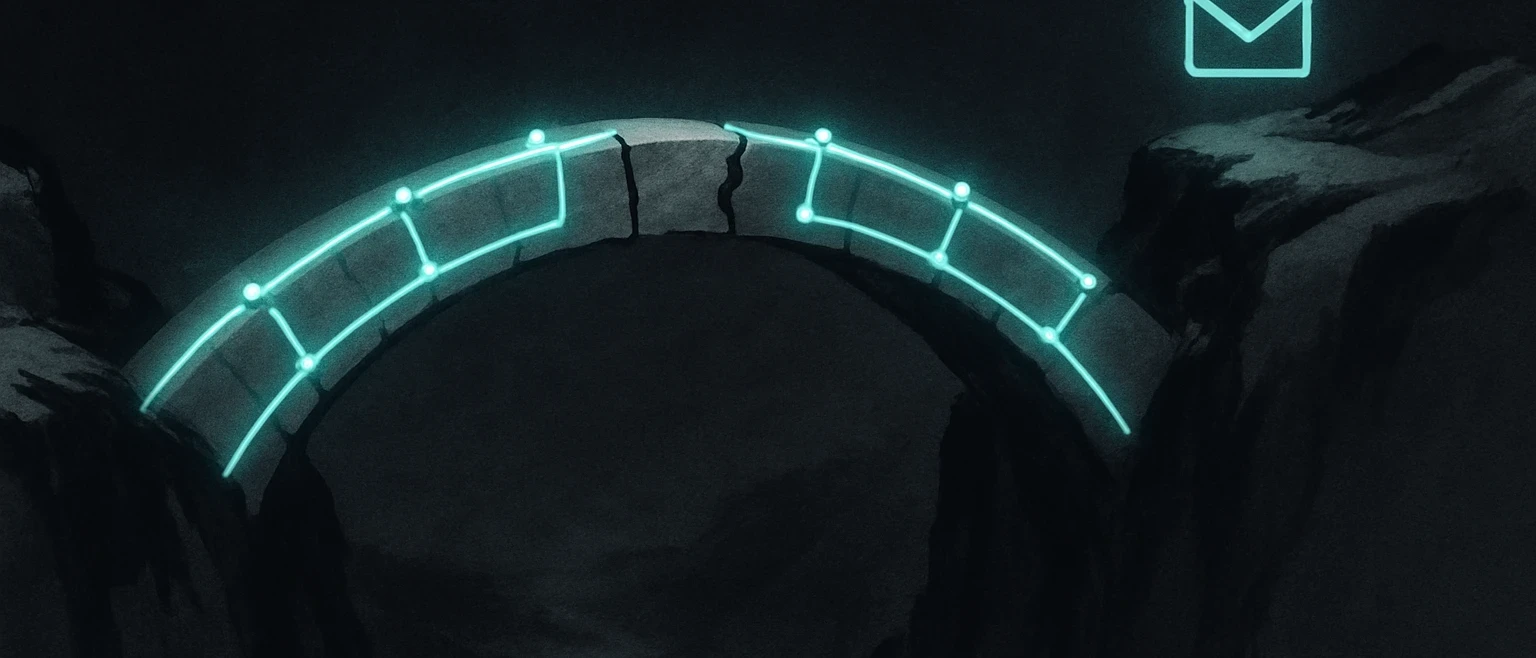
From First Touch to Booked Meeting: The B2B Outbound Path
TL;DR: The B2B outbound conversion path is a multi-stage process that moves a cold prospect from first contact to a booked meeting. It covers ICP targeting, infrastructure setup, outreach copy, follow-up sequences, and reply handling. Most outbound fails not because of bad writing, but because the pipeline breaks at one or more of these stages. When each stage works together, cold outreach becomes a predictable, scalable source of qualified meetings.
Why Most Cold Outreach Never Reaches a Booked Meeting
The gap between sending an email and booking a meeting is wider than most people expect. Teams often blame the copy when a campaign underperforms, but poor writing is rarely the real problem. The breakdown usually happens long before anyone reads a single word.
Deliverability issues, misaligned targeting, no follow-up plan, and slow reply handling all quietly drain conversion without leaving obvious clues. A prospect cannot book a meeting with you if your email lands in spam. They will not reply if your message is not relevant to their actual situation. And even a warm reply goes cold if you take three days to respond. These are the structural cracks that explain why B2B cold outreach campaigns fail long before they get a fair shot.
The teams that consistently book meetings treat outbound as a system, not a series of individual emails. They audit every stage of the funnel, fix the leaks, and build a repeatable path from first touch to calendar invite. That is the approach this article walks through.
What Does the B2B Outbound Conversion Path Actually Look Like?
The B2B outbound conversion path is the sequence of stages a prospect moves through from the moment they receive your first message to the moment they confirm a meeting on your calendar. Each stage has a specific job to do, and each one is a potential drop-off point if handled poorly.
The full path looks like this: define your ICP → source the right leads → set up infrastructure that delivers to the primary inbox → send outreach that earns a reply → follow up with enough persistence to keep the conversation alive → handle replies quickly and professionally → convert interest into a booked call. Most teams lose prospects at two or three of these stages without realizing it.
What separates high-converting outbound teams from the rest is not a single tactic. It is the discipline to treat every stage with equal attention. A brilliant email to the wrong person is wasted. A great message from a flagged domain never gets seen. A warm reply left unanswered for 48 hours goes cold. The path only works when every stage is functioning.
Stage 1 - Defining and Targeting the Right ICP
Your ideal customer profile (ICP) is the foundation of everything. Get this wrong, and no amount of good copy, strong deliverability, or smart follow-up will save you. You are simply reaching the wrong people, and the best outcome you can hope for is silence. The worst outcome is spam reports that damage your sending reputation for months.
A well-defined ICP goes beyond job title and company size. It includes firmographic signals like industry, revenue range, and growth stage, as well as behavioral signals like recent funding rounds, hiring patterns, or technology adoption. The more precisely you define who your message is for, the more relevant that message becomes when it lands. ICP-aligned lead sourcing consistently outperforms generic list buying because relevance is built in from the start, not added as an afterthought.
Stage 2 - Building Infrastructure That Delivers to the Primary Inbox
Even the most compelling cold email is worthless if it lands in the promotions tab or the spam folder. Infrastructure is the most overlooked stage of the B2B cold email funnel, and it is the one that silently kills campaigns before they begin.
Proper infrastructure means sending from warmed domains with healthy sender reputations, using authenticated sending configurations (SPF, DKIM, DMARC), and managing sending volume carefully to stay within the limits that inbox providers trust. Skipping this setup to save time is one of the most expensive mistakes in outbound. A solid foundation on email domain warm-up strategies can compress what typically takes weeks into a much shorter window when done correctly. Near 100% primary inbox placement is not a bonus feature. It is the minimum requirement before sending a single message.
Stage 3 - Writing Outreach That Triggers a Response
Once your infrastructure is solid and your list is accurate, the email itself has to do its job. That job is not to impress anyone. It is to earn a reply from a busy professional who receives dozens of cold messages every week.
The emails that get replies are not the ones with the cleverest subject lines or the most detailed product descriptions. They are the ones that feel personally relevant, arrive at a moment when the recipient actually cares about the problem being raised, and make it easy to say yes. Psychological triggers like social proof, specificity, and a low-friction call to action consistently outperform generic pitches. Writing cold emails that actually get replies is a learnable skill, and the core principle is always the same: make it about them, not about you.
Stage 4 - Follow-Up Sequences That Keep the Conversation Alive
Most booked meetings do not come from the first email. Many teams find that a large share of positive replies in cold outreach come after the second, third, or even fourth follow-up touch. A single email and nothing more is not an outbound strategy. It is a missed opportunity.
Effective follow-up sequences are spaced strategically, shift tone slightly with each touch, and add new value or angles rather than just repeating the original pitch. Timing matters too. Follow-ups sent too quickly feel pushy. Follow-ups sent too far apart lose momentum. A well-designed sequence spans several touches over a few weeks, with the exact cadence depending on the vertical and the typical sales cycle length. The goal is to stay visible without becoming annoying.
Stage 5 - Handling Replies and Converting Interest Into a Meeting
A reply is not a booked meeting. It is an invitation to continue the conversation, and how you handle that invitation determines whether the prospect ends up on your calendar or quietly disappears. Speed is the single biggest variable at this stage. Replying within the first hour of receiving a warm response dramatically increases the probability of converting that interest into a confirmed call.
Tone matters just as much. Once someone has replied, the dynamic shifts. The prospect is no longer cold. They have shown interest, and the conversation needs to move naturally from outreach mode into human dialogue. Overcomplicated scheduling links, overly formal language, or generic templates at this stage signal a lack of care and break trust at the worst possible moment. Keep replies concise, warm, and direct. Offer a specific time or a short scheduling link. Make the next step as frictionless as possible.
How Human-in-the-Loop AI Improves Conversion at Every Stage
Most AI-powered outbound tools operate as black boxes. They pull data, generate messages, and send them without any human check on whether the output actually makes sense for the recipient. The result is often contextually wrong, obviously robotic, or damaging to the brand it is supposed to represent. Hallucinated context, awkward personalization, and tone-deaf messaging are not edge cases with fully automated tools. They are regular occurrences.
Lidgen's Human-in-the-Loop architecture is built around a different philosophy. AI handles the research-intensive and repetitive work: lead sourcing, prospect research, signal detection, and personalization at scale. Humans retain control over the moments that carry real brand risk, including messaging tone, judgment calls on sensitive accounts, and decisions about how to handle replies that require nuance. This is where outbound either earns trust or loses it, and it is not a decision you want a model making alone.
The practical result is outreach that reads like it came from a person who actually understands the prospect's situation, because a person did review and approve it. That is a meaningful distinction in an inbox environment saturated with obvious AI-generated noise. It is also why teams using this model convert at a higher rate than those relying on fully automated tools, as the comparison becomes clear when you look at where sales automation falls short in real campaigns.
What Metrics Should You Track Across the Outbound Funnel?
Tracking the right metrics is how you find out where your B2B cold email funnel is leaking. Most teams track the wrong ones and end up optimizing for signals that have no real relationship to pipeline growth.
The metrics that matter are reply rate, positive reply rate, meeting-booked rate, and sequence completion rate. Each one tells you something specific about a different stage of the funnel. A low reply rate points to problems with deliverability, targeting, or the email itself. A low meeting-booked rate despite healthy replies suggests the issue is in how warm leads are being handled. Sequence completion rate tells you whether prospects are dropping out before the full sequence runs, which could indicate messaging fatigue or poorly spaced follow-ups. For context on what strong performance looks like, benchmarks for what a good reply rate for cold emails looks like in 2026 give a useful baseline for comparison.
Why Open Rates Are a Misleading Success Signal
Open rates feel like a useful metric because they are easy to see and easy to improve. A more provocative subject line, a different sender name, a new preview text: these tweaks can move open rates quickly. But open rates tell you almost nothing about whether your outbound is generating meetings. Apple's Mail Privacy Protection, along with similar features in other email clients, has made open tracking unreliable to the point where many experts recommend stopping open rate tracking in cold email entirely as a primary KPI.
A prospect can open your email five times and still never reply. A campaign with a modest open rate but a high positive reply rate is dramatically outperforming one with strong opens and no engagement. Chasing open rates is a distraction that pulls attention away from the metrics that actually predict revenue.
The Metrics That Actually Predict Pipeline Growth
The three metrics that have the strongest relationship to actual pipeline growth are positive reply rate, reply-to-meeting conversion rate, and meeting-booked rate. Positive reply rate filters out unsubscribes and auto-responses and tells you what percentage of recipients were genuinely interested in continuing the conversation. Reply-to-meeting conversion rate shows how effectively your team turns that interest into a confirmed call. Meeting-booked rate, expressed as a percentage of total prospects reached, gives you the top-line view of how efficient the entire system is.
In B2B cold outreach, what counts as a solid positive reply rate varies widely by industry, offer quality, and targeting precision, so a single universal benchmark is not reliable. The same is true of reply-to-meeting conversion rate. What matters more than hitting an industry number is tracking these metrics consistently over time so you can tell whether your funnel is performing or leaking.
How Long Does It Take to Go From First Email to Booked Meeting?
The realistic timeline from first email to booked meeting depends on several factors: the vertical you are targeting, the number of touches in your sequence, and whether your infrastructure was already warmed before launch.
In SaaS and AI-focused companies, where buying cycles tend to move faster and decision-makers are often more reachable, first meetings tend to come sooner. Fintech and cybersecurity typically run longer sales cycles, so the path from first touch to meeting usually takes longer, since more stakeholders are involved in the decision. MCA (Merchant Cash Advance) verticals tend to move quickly when targeting is precise, often producing replies and meetings early in the outreach.
The biggest variable is infrastructure. Teams starting from scratch with unwarmed domains often spend four or more weeks building sender reputation before they can send at meaningful volume. With pre-warmed infrastructure already in place, like what Lidgen provides, the timeline compresses dramatically. First leads can arrive within 24 hours of launch, which changes the economics of outbound entirely for early-stage teams and those running time-sensitive campaigns. Across most verticals, a well-structured multi-touch sequence is what it typically takes to generate a consistent flow of booked meetings from cold outreach.
Common Bottlenecks That Stall the Path to a Booked Meeting
Every outbound funnel has at least one place where prospects are consistently dropping off. Finding that place is more valuable than optimizing the parts that are already working. The most common conversion blockers are:
Wrong ICP: When the list does not match the problem you solve, no amount of good copy or smart follow-up can compensate. Irrelevant outreach generates low reply rates, high unsubscribe rates, and occasionally spam complaints that damage your sending reputation.
Poor deliverability: Emails that land in spam or promotions folders generate no replies because they are never seen. This is a structural issue that has to be fixed before any other optimization is worth attempting.
Weak personalization: Surface-level personalization, like using a first name and company name while the rest of the email is completely generic, does not move the needle. Prospects can recognize a template. What earns replies is specific, relevant context that shows you actually understand their situation.
No follow-up strategy: Sending one or two emails and treating silence as rejection is one of the most common reasons outbound teams underperform. Most positive replies come after the third or fourth touch. Without a real follow-up plan, you are leaving the majority of your potential meetings on the table.
Slow reply handling: A warm lead that waits 24 to 48 hours for a response frequently goes cold. Speed at this stage matters more than most teams realize. Understanding why B2B prospects ghost you after an initial reply often comes down to a delay that felt dismissive on the prospect's end.
Is Outbound Still Worth It for B2B Teams in a Crowded Inbox Environment?
The honest answer is yes, but only when it is done right. The skepticism about cold outreach is understandable. Inboxes are noisier than they have ever been, AI tools have made it trivially easy to generate high volumes of generic outreach, and buyers are more selective about what they engage with. The signal-to-noise ratio in most inboxes has gotten significantly worse over the past two years.
But that environment actually makes well-executed outbound more valuable, not less. When the majority of cold emails landing in a CTO's inbox are obviously AI-generated and clearly untargeted, a message that reads as genuinely relevant and thoughtfully written stands out sharply. The bar for what counts as good outbound has risen, but the reward for clearing that bar has risen too. The teams winning in this environment are those investing in targeting precision, infrastructure quality, and human oversight of messaging rather than just sending higher volumes.
B2B email as a channel is not dying. It is getting harder for lazy execution and easier for intelligent execution. For founders and sales leaders thinking about the long-term viability of outbound, the direction of the future of B2B email is toward higher quality, better targeting, and smarter human-AI collaboration rather than away from the channel entirely. Outbound done with the right infrastructure, the right ICP, and genuine human oversight remains one of the most scalable and controllable acquisition channels available to B2B companies today.
Frequently Asked Questions
What is the average number of touchpoints needed to book a B2B meeting from cold outreach?
Most B2B meetings from cold outreach take more than one touchpoint before a prospect replies and agrees to a call. Many positive replies come after the third follow-up or later, which is why running a full sequence rather than stopping after one or two touches is one of the most impactful changes a team can make.
How do I know where my outbound funnel is losing prospects?
Start by mapping your funnel stages and measuring the conversion rate between each one. If your emails are delivered but not generating replies, the issue is in your targeting or copy. If you are getting replies but not booking meetings, the issue is in your reply handling process. If your sequence completion rate is low, prospects may be dropping off due to spacing or tone issues mid-sequence.
Does better personalization always lead to more booked meetings?
Better personalization improves reply rates when it is genuinely relevant, but it is not a standalone solution. Personalization that references a real pain point or a specific signal tied to the prospect's business consistently outperforms generic templates. However, even the best personalization cannot compensate for poor deliverability, wrong ICP targeting, or a weak follow-up strategy. All stages of the funnel need to work together.
What is a realistic meeting-booked rate for B2B cold email campaigns?
A realistic meeting-booked rate for B2B cold email campaigns depends heavily on vertical, ICP quality, and infrastructure health, so there is no single number that applies everywhere. Tighter ICP definitions and stronger personalization are what reliably push this rate higher, which is a more useful lever than chasing an industry average.
How does Human-in-the-Loop AI improve the outbound conversion path compared to fully automated tools?
Human-in-the-Loop AI combines AI's ability to process data and personalize at scale with human judgment at the moments that matter most, such as approving messaging tone, handling nuanced replies, and protecting brand voice. Fully automated tools often generate contextually wrong or obviously robotic messages that damage trust. The Human-in-the-Loop model produces outreach that reads as genuinely human because a human is actually involved in the quality control process.
How long does it take to start seeing booked meetings from a new cold outreach campaign?
With pre-warmed infrastructure already in place, first meetings can appear quickly, often within the first few weeks of a campaign. Without pre-warmed domains, the setup phase alone can take four or more weeks before you can send at meaningful volume. Lidgen's pre-warmed infrastructure removes that delay entirely, with first leads possible within 24 hours of launch. Timeline also varies by vertical, with SaaS and AI companies typically moving faster than fintech or cybersecurity.
Should reply handling be automated or managed by a human?
Reply handling should be managed by a human, or at minimum have human oversight before any response is sent. The moment a prospect replies, the dynamic shifts from cold outreach to a live conversation, and tone, speed, and judgment matter enormously. Automated replies at this stage frequently feel impersonal and can undo the trust that a strong outreach sequence built. Speed is critical: responding within the first hour of a warm reply significantly increases the probability of booking a meeting.